The Wonders of Black Holes and the Big Bang: Exploring the Andromeda Galaxy, the Magellanic Clouds, and Triangulum
The Big Bang, the prevailing scientific theory about the origins of our universe, continues to captivate our imagination and challenge our understanding of the cosmos. In this article, we will explore the fascinating aspects of the Big Bang, while also delving into the mysteries of black holes. Furthermore, we will take a closer look at the Andromeda Galaxy, the Magellanic Clouds, and Triangulum, neighboring galaxies that offer valuable insights into the cosmic tapestry.
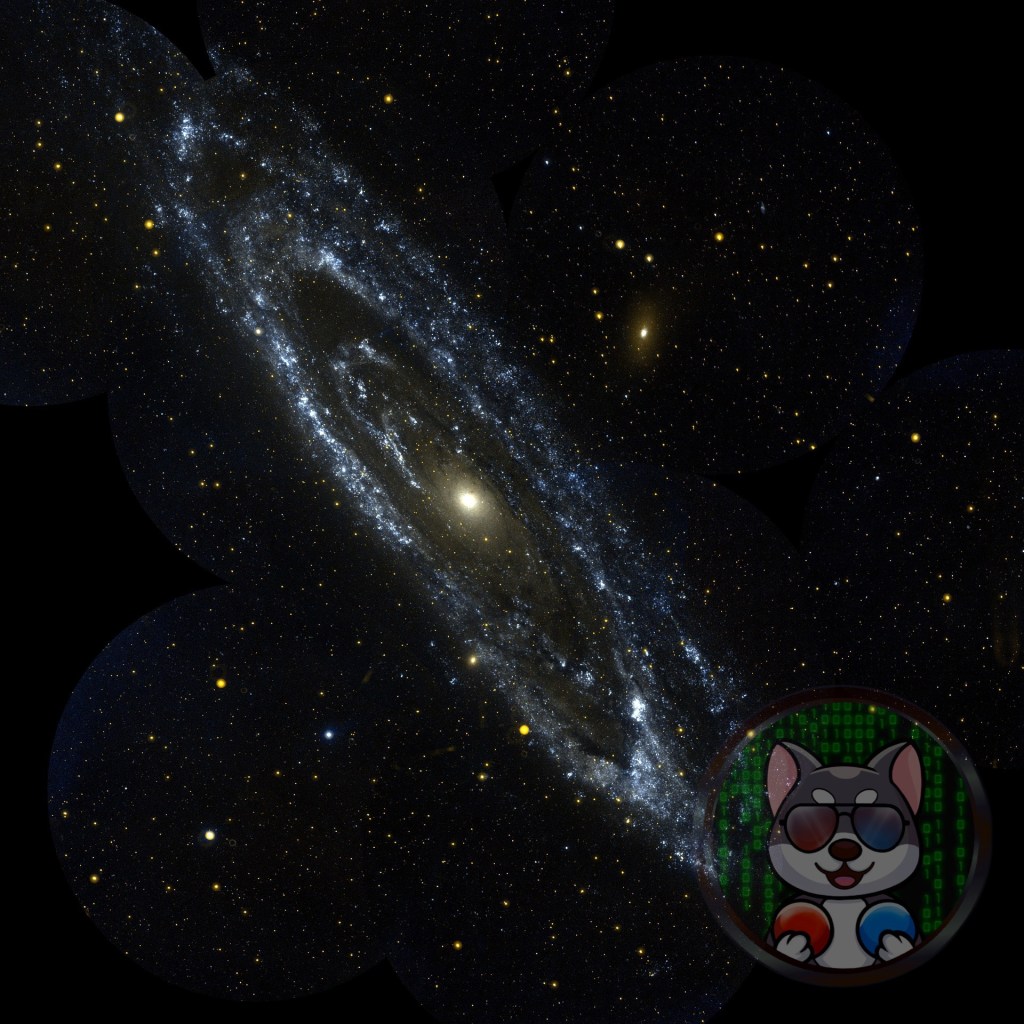
Understanding the Big Bang:
The Big Bang theory posits that approximately 13.8 billion years ago, the universe originated from a singularity—an infinitely dense and hot state. From this tiny point, the universe underwent rapid expansion, giving rise to matter, energy, and the fundamental forces that govern our existence today.
Time and Paradoxes in the Big Bang:
While the Big Bang theory itself does not involve inherent time paradoxes, the concept of time plays a crucial role in understanding the expansion and evolution of the universe. As the cosmos expanded, time as we perceive it emerged. Prior to the Big Bang, our conventional understanding of time loses meaning, and the laws of physics break down.
Black Holes and Their Enigmatic Nature:
Although black holes are not directly connected to the Big Bang, they hold tremendous significance in unraveling the mysteries of the universe. Formed from the collapse of massive stars, black holes possess gravity so intense that nothing can escape their grasp, including light. The study of black holes provides invaluable insights into the nature of gravity and the fabric of spacetime, deepening our understanding of cosmic evolution.
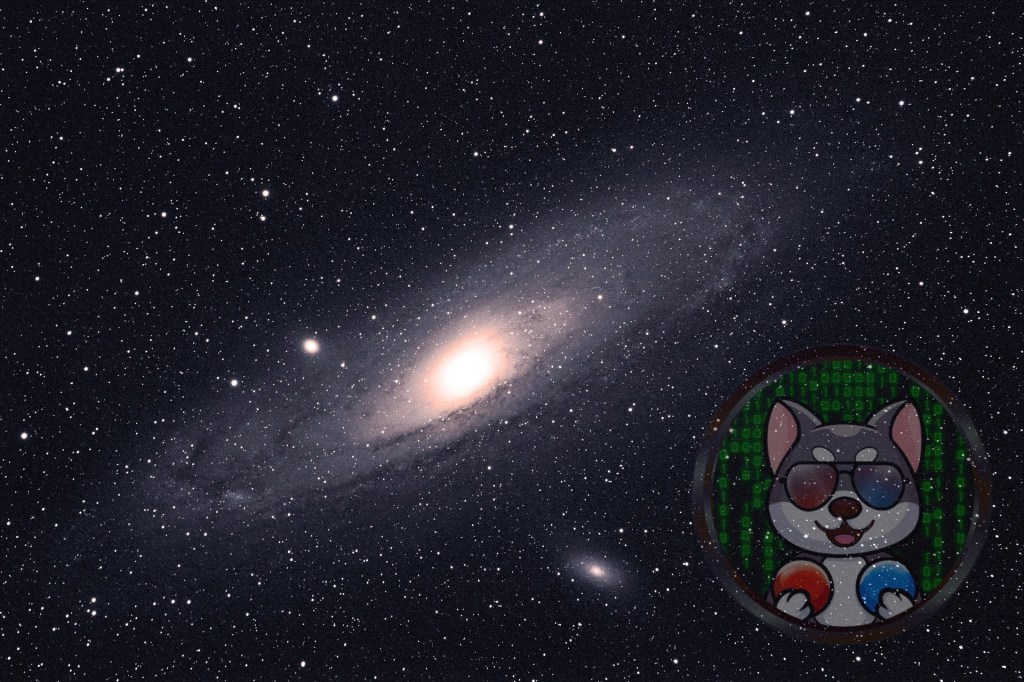
Exploring Neighboring Galaxies:
- Andromeda Galaxy (M31):
The Andromeda Galaxy, located approximately 2.5 million light-years away from us, is the closest spiral galaxy to our own Milky Way. Within its vast expanse, it likely harbors a population of black holes, including stellar-mass black holes and possibly even a supermassive black hole at its center. Studying black holes in Andromeda offers a unique opportunity to understand their role in galaxy formation and evolution. - The Magellanic Clouds:
a. Large Magellanic Cloud (LMC):
As a dwarf irregular galaxy located approximately 163,000 light-years away from the Milky Way, the LMC is one of our closest galactic companions. It presents a fascinating environment for studying stellar evolution and the dynamics of a smaller galaxy interacting with larger ones. b. Small Magellanic Cloud (SMC): The SMC, another dwarf irregular galaxy, orbits the Milky Way and the LMC. Positioned about 200,000 light-years away, it offers valuable insights into the properties and behavior of galaxies with lower masses.
- Triangulum (M33):
Triangulum, also known as the Triangulum Galaxy, is a spiral galaxy and a member of the Local Group, which includes the Milky Way and Andromeda. Located approximately 3 million light-years away, it provides researchers with an opportunity to study the characteristics of a relatively nearby galaxy and its relationship to our own.
The Big Bang theory offers a profound understanding of the birth of our universe, while black holes continue to fascinate with their immense gravitational power. Although not directly tied to the Big Bang, black holes serve as cosmic laboratories for testing the laws of physics. Moreover, the Andromeda Galaxy, the Magellanic Clouds, and Triangulum, as neighboring galaxies, allow us to explore and expand our knowledge of galactic evolution. The quest to comprehend the universe’s mysteries through these captivating entities and phenomena inspires ongoing scientific exploration and fuels our awe for the cosmos.


 Microcap and Nanocap Crypto