🧠 Final Binary: The Crypto Game Where the Minority Rules
The crypto world is no stranger to innovation, but Final Binary introduces something refreshingly unique — a social coordination game where strategic imbalance is not a flaw, but a feature.
Final Binary is an on-chain Web3 game where players pick a side — RED or BLUE — and deposit tokens to influence the outcome. But there’s a catch: if one side dominates with over 70% of the total deposits, it automatically loses. The minority wins.
This twist flips traditional game theory on its head. Instead of simply backing the obvious winner, players must engage in social coordination, recruitment, and misdirection. It’s less about brute force and more about psychology, timing, and trust.

🔴🔵 Game Mechanics That Challenge Herd Mentality
Each 24-hour cycle consists of three distinct phases:
Open Phase (18h) – All deposits are public Hidden Phase (2h) – Players use a cryptographic commitment-reveal system to hide their bets Reveal Phase (2h) – Players disclose their hidden deposits to finalize the outcome
This phase design, especially the hidden deposit feature, adds strategic uncertainty. Players can no longer wait until the last moment to react — they must make decisions amid ambiguity, which mirrors real-world coordination problems.
🪙 From ETH to GPULSE: Chapter-Based Token Dynamics
The game runs in two chapters:
Chapter 1 uses ETH deposits on the Base network and distributes a utility token called GPULSE as rewards. Win or lose, participants earn GPULSE, giving even the “losers” a stake in future rounds. Chapter 2 shifts the battlefield to GPULSE itself. Players deposit GPULSE tokens and receive 20% APR staking rewards. The winning side earns both deposits and APR-based incentives, while the losing side keeps only its APR.
The chapter structure rewards early adopters and introduces progressive utility for GPULSE, tying gameplay to token economics in a compelling way.
🔐 Minority Wins: The Anti-Whale Mechanism
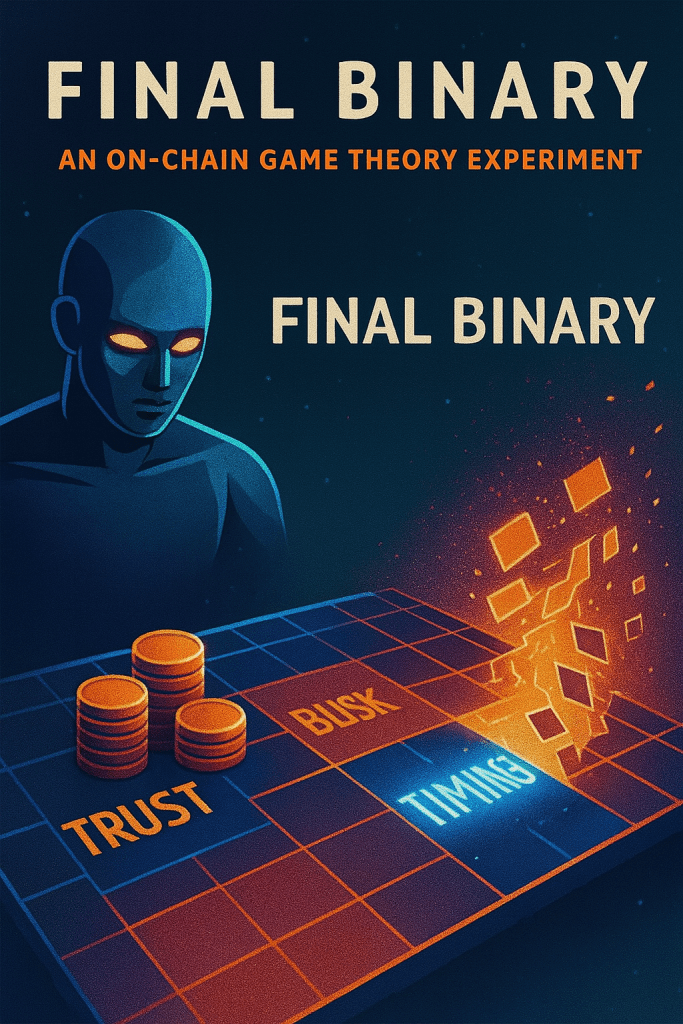
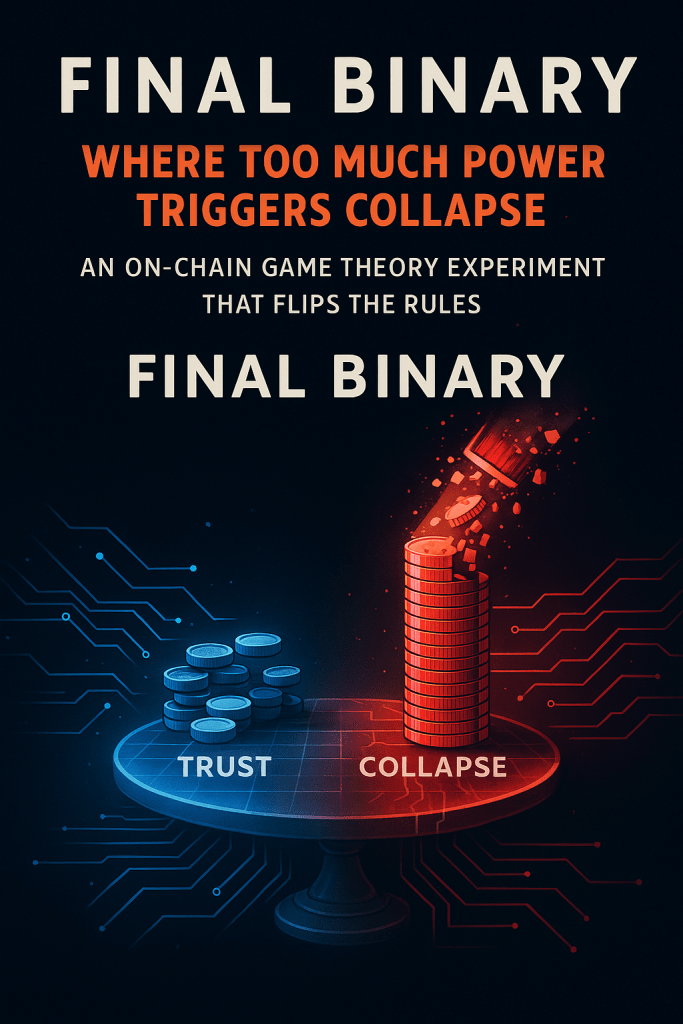
The heart of Final Binary lies in its Minority Rule. If 70% of tokens are on one side, that side forfeits — triggering a “kill switch” that rewards the underdogs. This prevents whales or bots from dominating, and creates a live-action simulation of AI-alignment dilemmas, governance fragility, and the limits of centralized influence.
It’s a game that plays with trust, momentum, and belief systems — echoing crypto’s broader themes of decentralization and crowd dynamics.
🎯 Final Thoughts
Final Binary is more than a game. It’s a commentary on power distribution, collective behavior, and human coordination in the digital age. By embedding game theory into tokenomics and leveraging cryptographic commitments, it opens up a new category in crypto gaming — one where victory lies not in numbers, but in balance.
Whether you’re a strategist, a memecoin degen, or just curious about new frontiers in Web3, Final Binary is a project to watch — and possibly play.
🏷️ SEO
on-chain game, web3 strategy game, final binary, crypto social game, blockchain gaming, minority wins game, red vs blue crypto, GPULSE token, ETH staking, commitment reveal system, base network game, crypto coordination game, game theory blockchain, web3 daily game, crypto AI narrative, hidden deposit crypto, crypto kill switch, decentralized betting, token war, crypto staking rewards, ETH to GPULSE, crypto chapter-based game, GPULSE APR, web3 social dynamics, crypto power multiplier, anti-whale mechanism, cryptogame, ethereum game, staking game web3, daily crypto game, crypto recruitment game, trust-based game, belief-driven blockchain game

 Microcap and Nanocap Crypto